


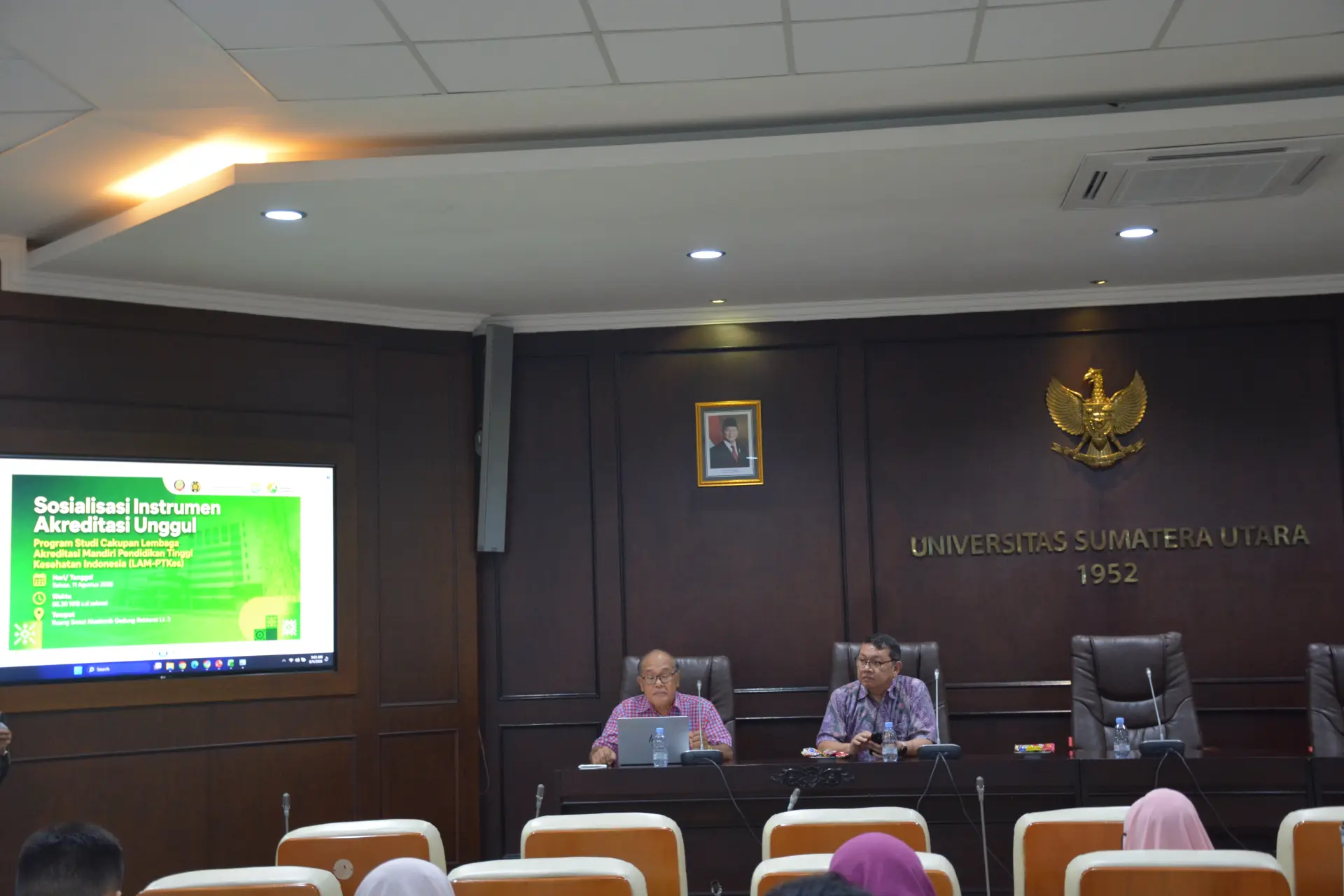
MEDAN — Universitas Sumatera Utara (USU), through the Directorate of Quality Assurance (DITPM), held another Socialization of Study Program Accreditation Instruments covering the Independent Accreditation Institute for Higher Education in Health Sciences of Indonesia (LAM-PTKes). The activity was held at the 3rd Floor Academic Senate Room, USU Rectorate Bureau, on Monday, August 11, 2026.
The activity was opened with remarks by Prof. Dr. Drs. Jonner Hasugian, M.Si. The session featured Prof. Dr. dr. Kiking Ritarwan, Sp.S(K), MKT, from the Faculty of Medicine of USU, as the keynote speaker.
Prof. Jonner discussed the implementation of study program accreditation in accordance with the latest regulations, including Minister of Education, Culture, Research, and Technology Regulation Number 53 of 2023 and Minister of Higher Education, Science, and Technology Regulation Number 39 of 2025. Under these regulations, accreditation status has been simplified into three levels: Not Accredited, Accredited, and Excellent Accredited.
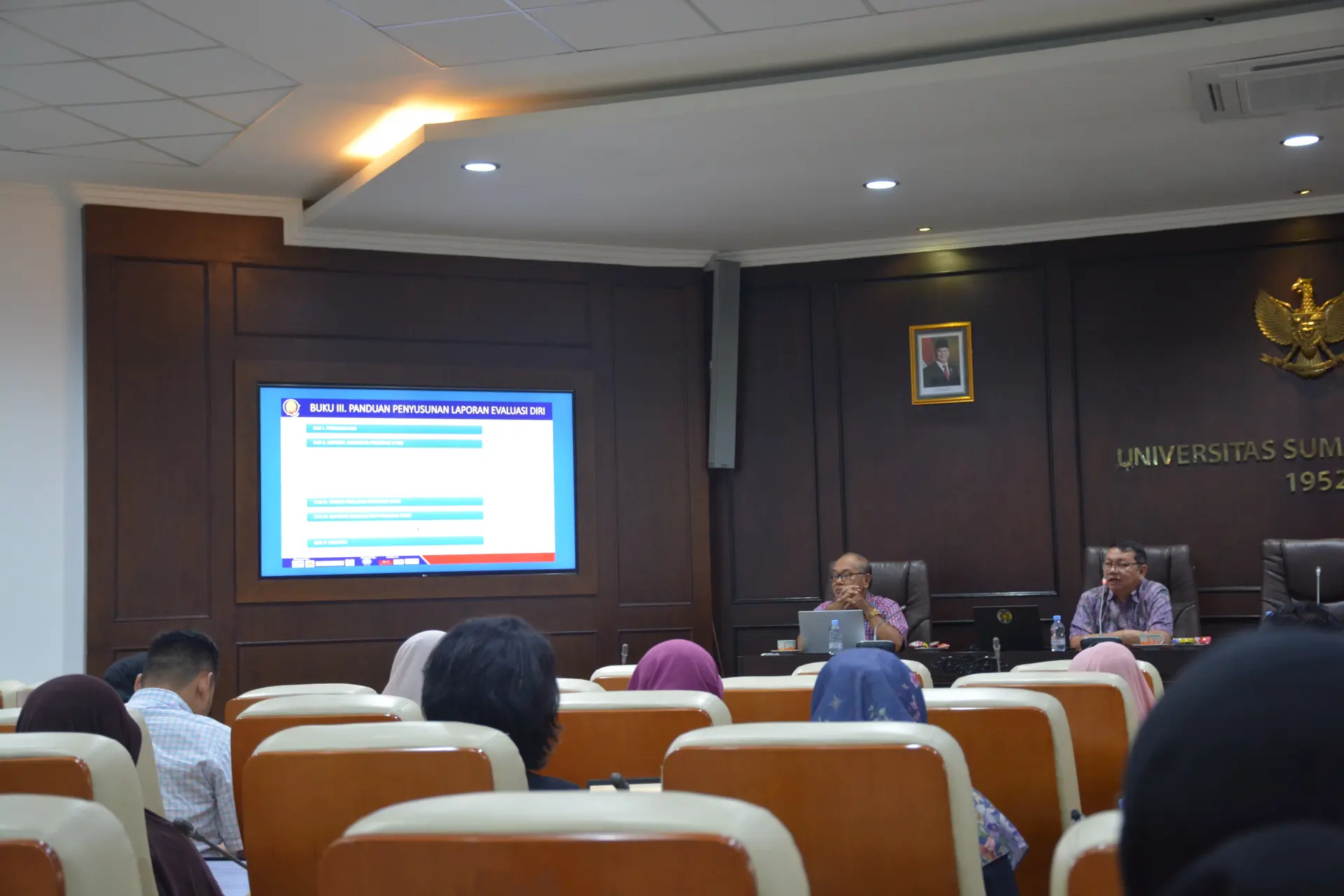
In his presentation, Prof. Kiking emphasized the importance of readiness among all study programs in the health sciences at USU in facing the new LAM-PTKes accreditation instruments. He further emphasized:
“With the latest regulations in place, we must ensure that all study programs in the health sciences at USU are not only accredited but are also capable of achieving Excellent Accreditation status. This is our shared commitment to maintaining the quality and competitiveness of our graduates.”
The socialization aimed to provide faculty leaders, study program heads, and quality assurance teams with an in-depth understanding of the changes and requirements of the latest LAM-PTKes accreditation instruments. In line with the USU Strategic Plan (Renstra) 2025–2029, which targets all study programs achieving Excellent Accreditation, this activity served as a strategic step in preparing the required accreditation forms and supporting documents.
Through this socialization, USU reaffirmed its commitment to continuously improving the quality of higher education, particularly in the health sciences, to enhance its competitiveness at both the national and international levels.